Showing posts with label Xinjiang. Show all posts

September 10, 2004

Silk Road - Xinjiang Finale

Silk Road will continue, but the journey for Xinjiang has came to an end.

We spent 14 of our 23 days journey in Xinjiang and we were having hard time at the moment we thought of crossing the border to the province of Gansu.  Not that Gansu is any less, Magao Cave is in Gansu, however, we were showered with the kindness of Uyghur for 14 days and we know we will have problem to face the Han Chinese.  Why?  Because we were never once cheated or conned by Uyghur in Xinjiang.  And for all we read, that is not the case heading east.

With a heavy heart, I am to show a summary what I felt about Xinjiang.

The Land
Desert - It was the first time I see desert.  Just like the feeling as I read it, quiet, vast, dry, surprisingly, pleasant to me!  Wierd, no!  Side effect of having 9 siblings and living in a land with lot of rain. I totally appreciate the feel of a desert, mysterious!


Oasis - It is like a place where you see hope.  A 26 hours of bus ride without anything around is a despair feeling.  The scene of an oasis takes all those despair away and gives every bit of hope that things are assure, comfortness!


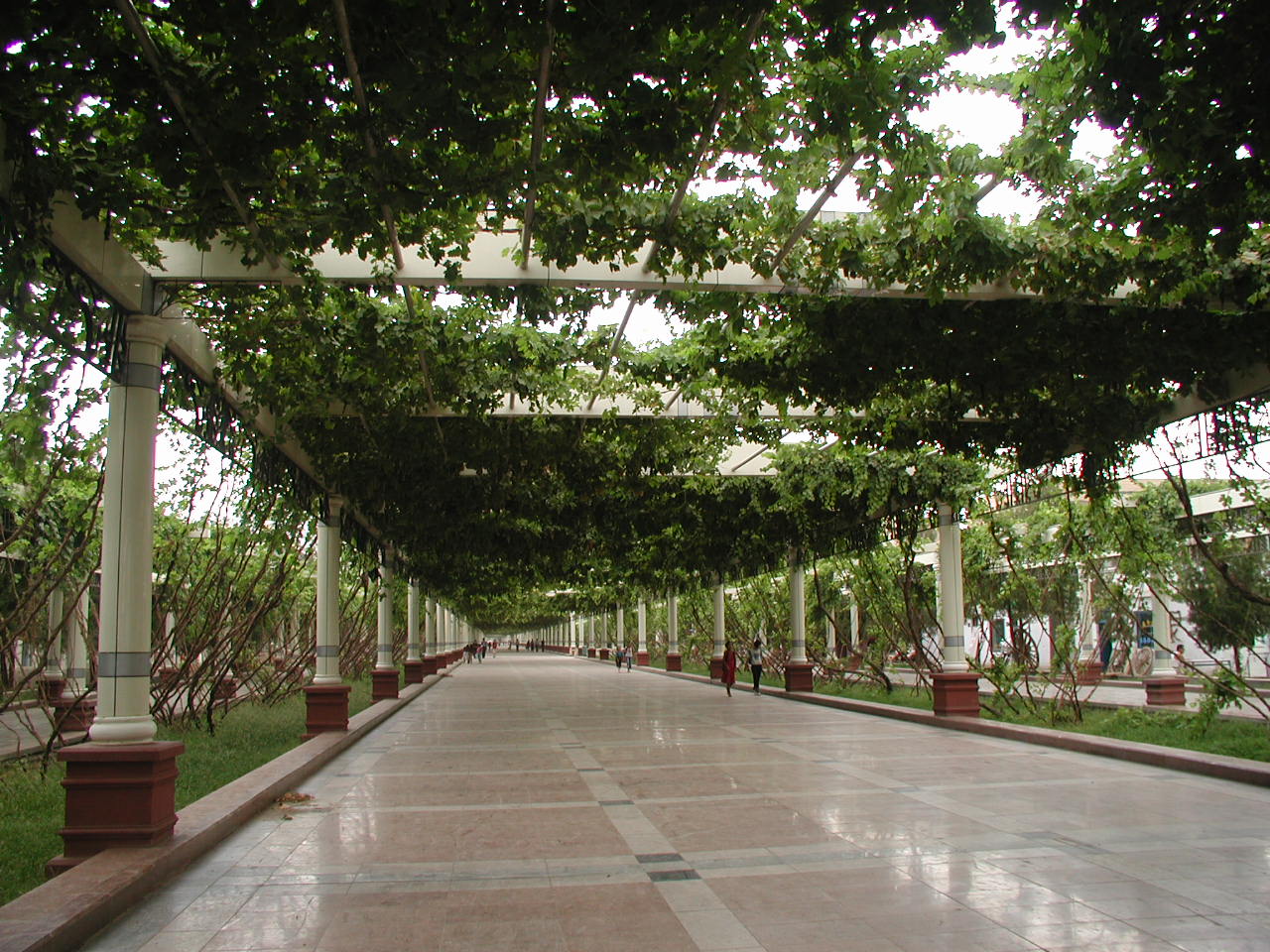
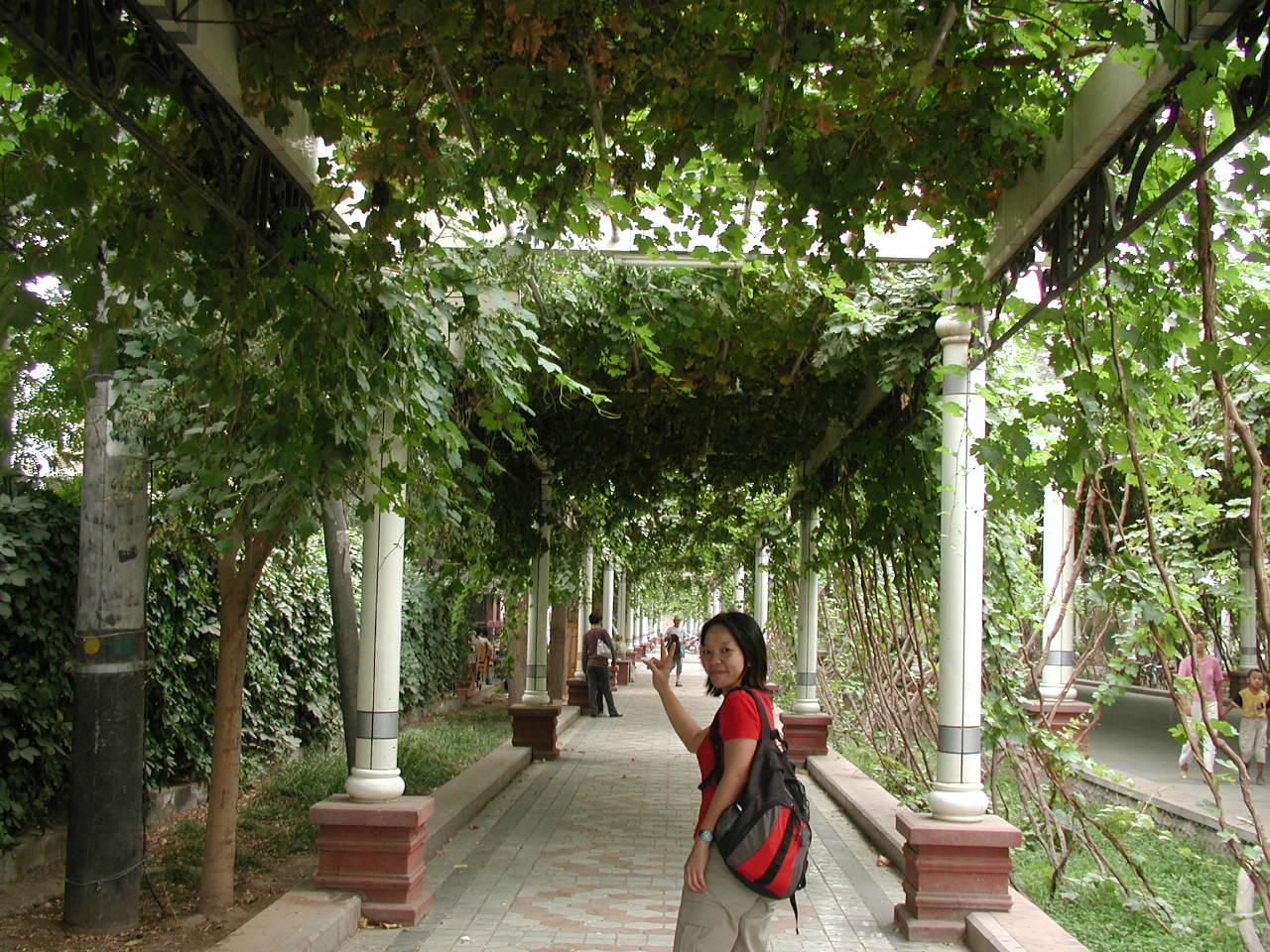
Grape Trellises - I came to Turfan to see what is in the history, in the legend and in the story book.  The grape trellises tell it all.  I can spend all my time walking up, walking down, sit along the side walk, and have a drink.  I do not mind to be one of those seasonal workers here, enjoying the sense of, romance!

The Culture
Mosque - It should be familiar as there are many back home, but there are completely different.  The mosque here puts more emphasis in the front facade and the minaret, not so much to the dome as back home.  It normally like a piece of art work sitting in the middle of no where.  It might not have many attendants, but calling out far, in faith!


Art - I am not a muslim, but have always interested in the Arabic art.  The grilles,  the ceramic tiles, the carved foliage inscriptions. It looks colourful and I some how see patience in every piece of it.  More over, it's duty, sacred!


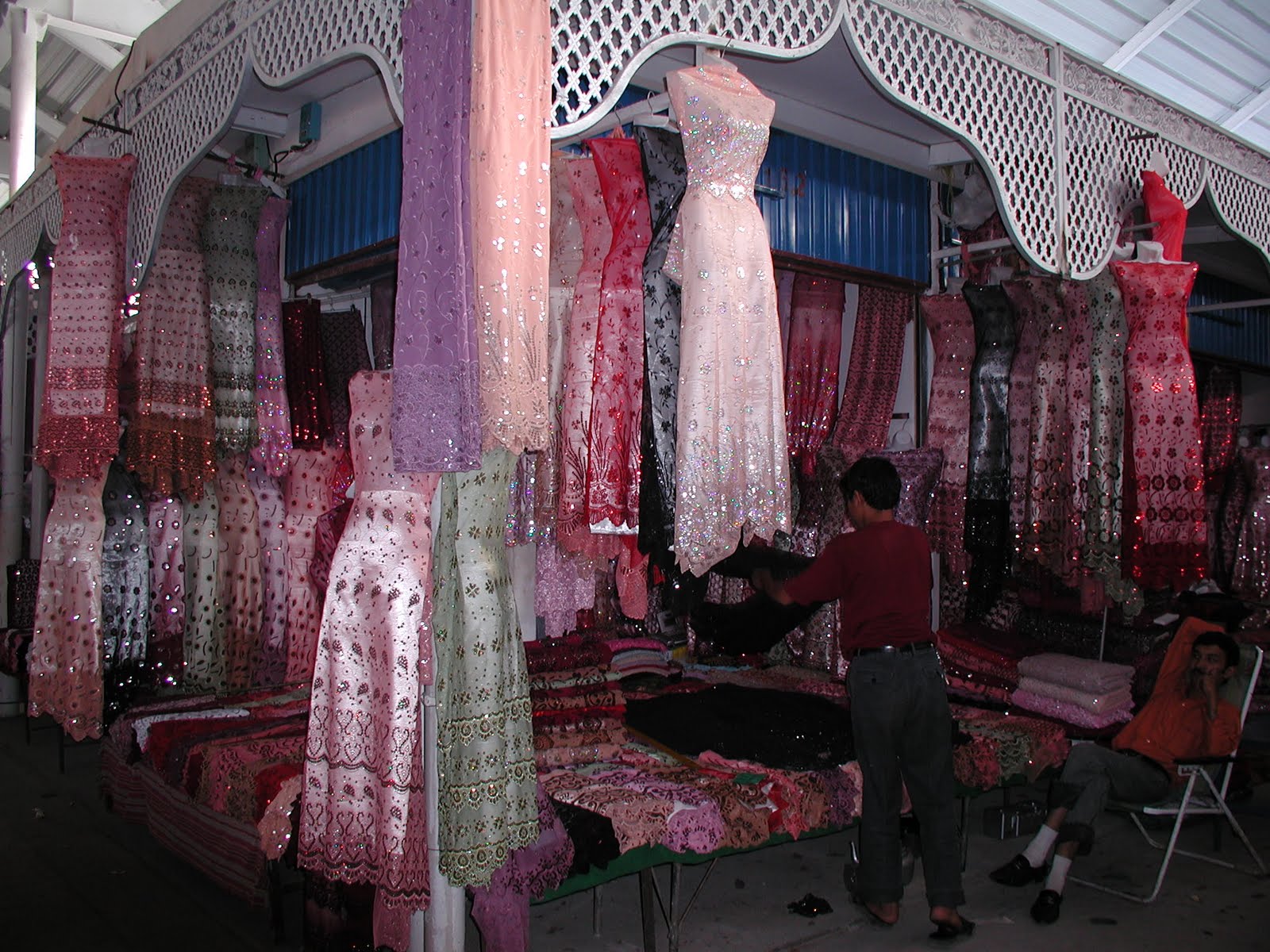
Bazaar - Hahaha :-).  Yes, I like this one the most.  The sundry produces, the variety of fruit, and most of all, the textiles.  By just walking along the bazaar and vesting through all the textile stores, I alrady feel, beautiful!


 The People
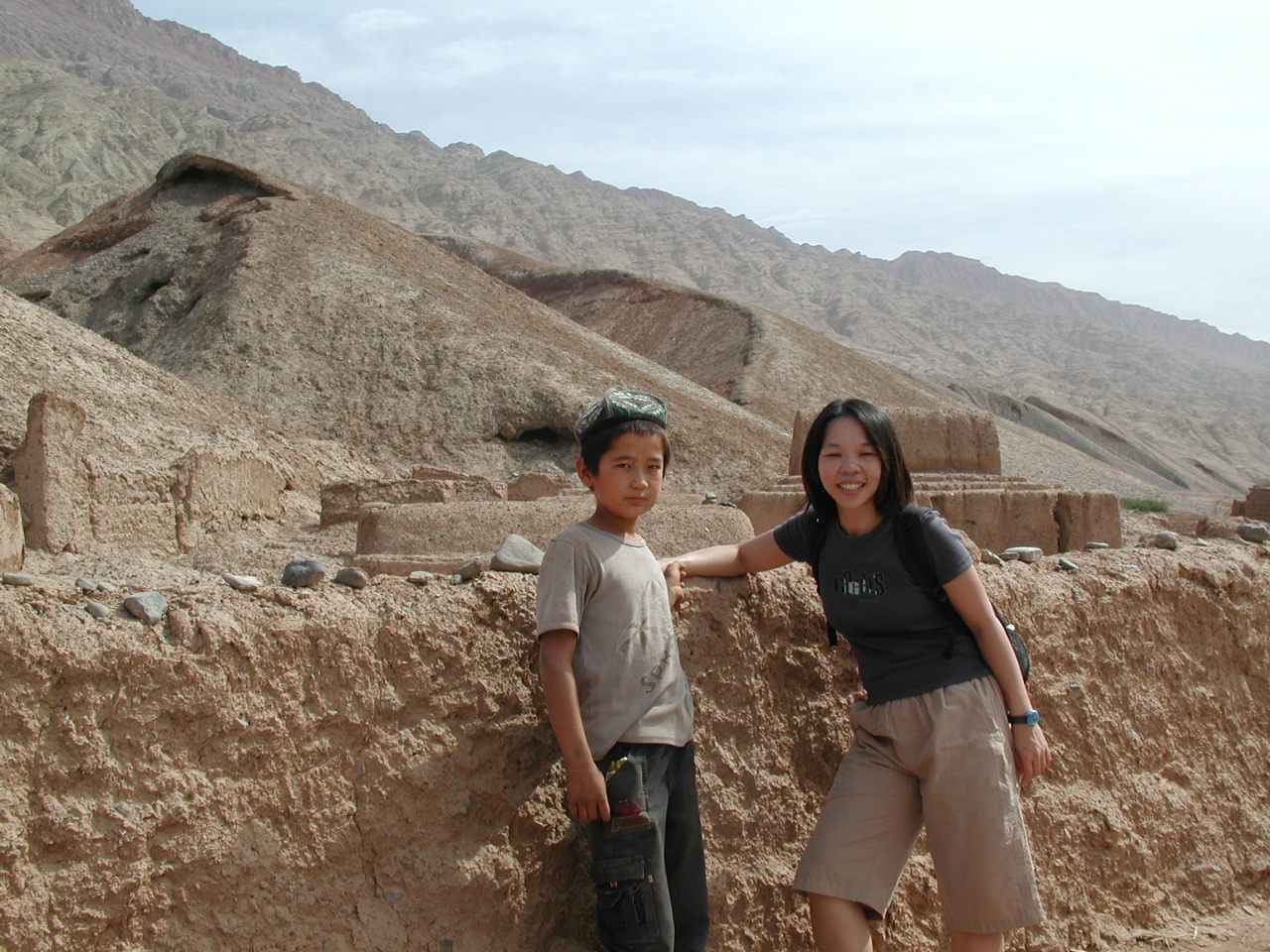
Kids - Children are amazing here.  Their smiles are never ending! They called you, asked you to take their photos, always with a big smile.  They laugh even more when they see their own photos in the camera.  They are everywhere and decorated their land with the upmost, innocence!
Folks - Most impression of a muslim society is uptight.  Well, mine is they are honest. For the record, I had bought 1kg of grape for RMB1, 2 fat goat milk bagel nun buns for RMB1 and 2 botols of date drink for RMB1.  Negotiating a price to them is a no no. The is what I called, virtue!
Family - Everything has to happen with a family.  Work, especially!  They are so family oriented that it makes a traveller like me feeling shameful of myself. The inclusion does not matter with time, place or us, the strangers.  It puts me in mix feeling to leave their land because it touches the softest part of a human, compassion!


That's it for Xinjiang, writing making me feel like going back again! 


**Note - the 234 photos for Xinjiang are  here (photos 7-240) and the 17 posts for Xinjiang are here. 

September 9, 2004

Silk Road - Xinjiang Turfan, Toyoq Valley people

We came for the door, but we got more than what we came for!
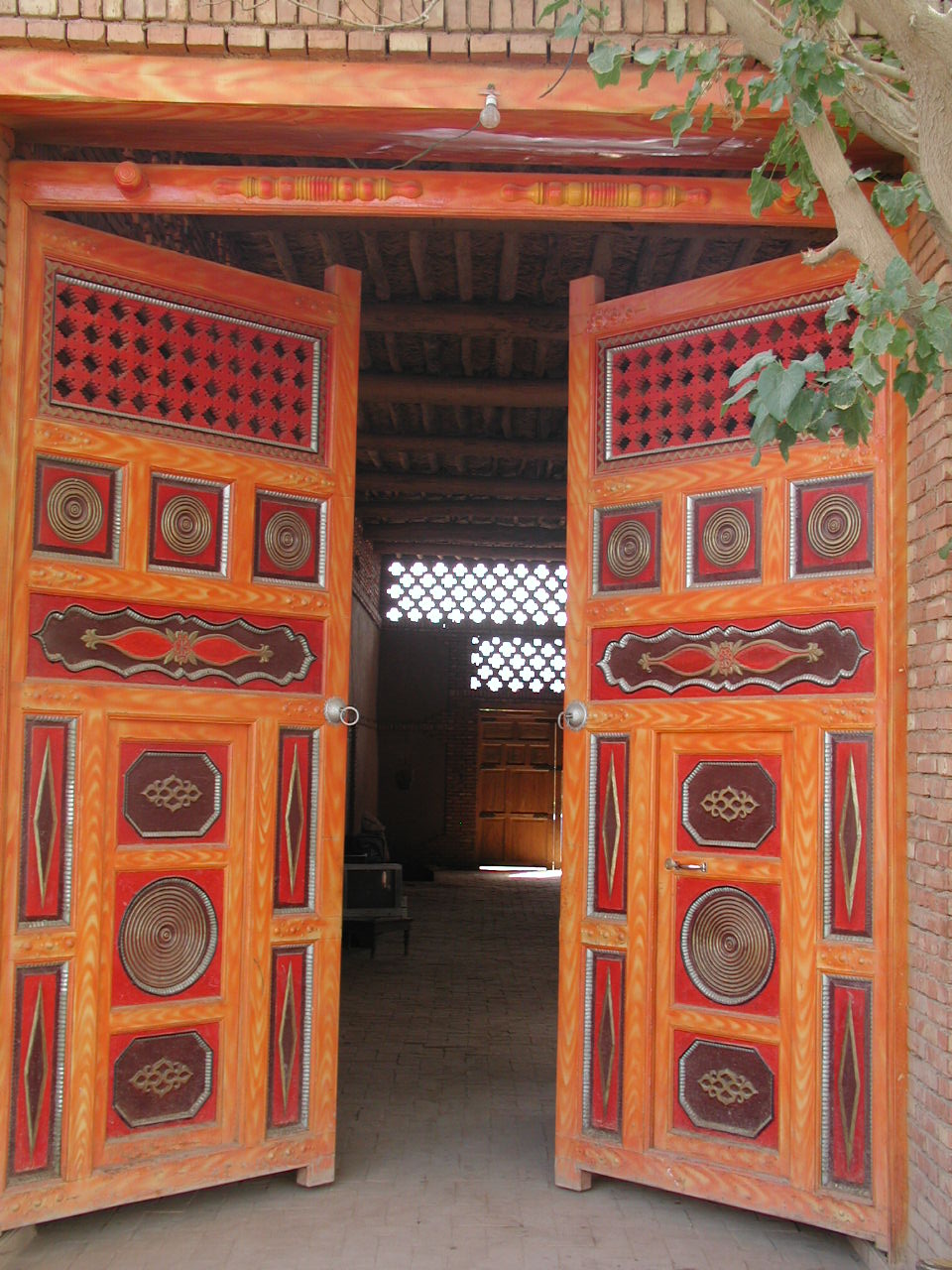
I can't write about Toyoq Valley without telling the stories of the people we met here.  The lady in red, with her upmost resilence to upkeep her feminine in a pair of heel on a rocky road. The old granny who came and open the big orange door, she was at least hundred year of age.  It shows you that life is more matter to the Uyghur here than anythings.

As we walked, we were also peeping into the Uyghurs' house to see how they work on raisin production.  As though we should not have, it is offensive to these people, they are muslim.  However, we were surprised by the friendliness of the people here.  Work is done together in a family as they normally have big family and stay together.
This couple saw us passing by and taking photos.  Without stopping us, pulled us into their roof top, show us how they worked on the raisin and offered us to eat their raisin. When we were reluctant to take their raisin, they got angry with us.  :-) so, lesson learnt - never refused a kind offering from Uyghur, they will get angry!

We met Abdullah at the end of the road where the mosque is.  Abdullah goes to school here.  Even though they are Uyghur, the class is in Mandarin as it is a province of China.  I asked Abdullah why is he not in class and going around.  He said - very few students at school, teacher is off and he does not like the Mandarin class so he is skipping it.  He only can communicate in very basic Mandarin.

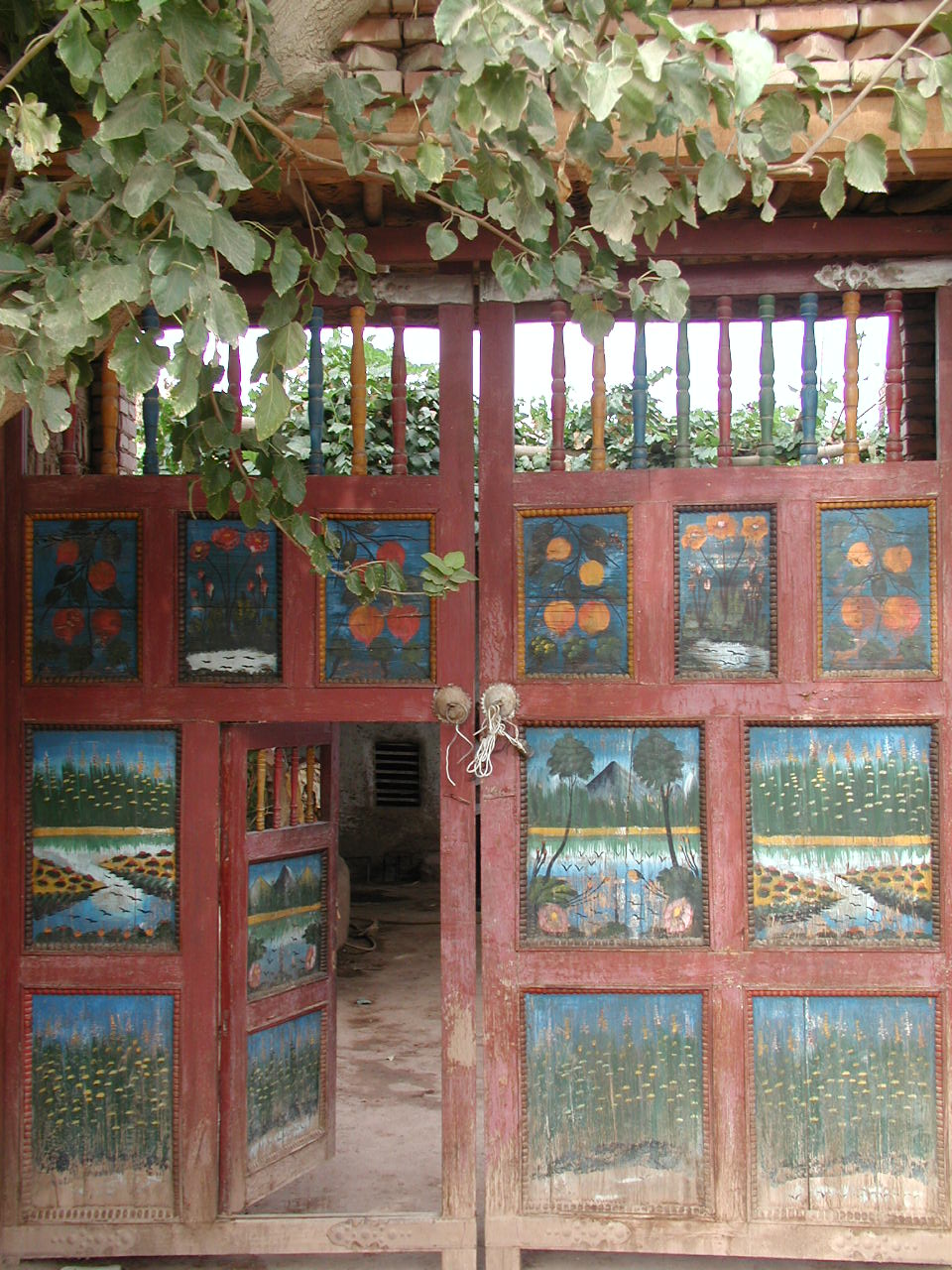
We met this family on the way back.  They have one of the newest door, thus, the paint is still fresh. The daughter can speak proper Mandarin and is the only person I can fully communicate to.  The father is no longer around and the mother takes care of her 3 children alone.  According to her, life is not easy, but peaceful in Toyoq Valley.  Again, they were so friendly they invited us in, offerred us tea and raisins.  We visited her house but didn't have anything as we were heading to catch the bus back to Turfan.
Kids here love to be photographed.  They will ask to be photographed and once you show them the photo on your digital camera, they will laugh and laugh.  It was 2004, not quite a digital age yet and they were surprise to see themselve on the digital camera. But, they will do it over and over again.


Every house we peeped in, the Uyghur family will pull us in, offering us raisin is a must, some offered tea.  I wrote about the people because recently I saw many incidents of violence in Xinjiang betwen the Uyghur and the Han Chinese.  I can't help but to doubt the cause is the Uyghur for the reason of my experience with these people.  They might not be the most civilized, or educated, however, they are the most honest and friendly people I have met in my travel.  They have a very different kind of culture, but hey, who are we to judge them. Give it a thought!

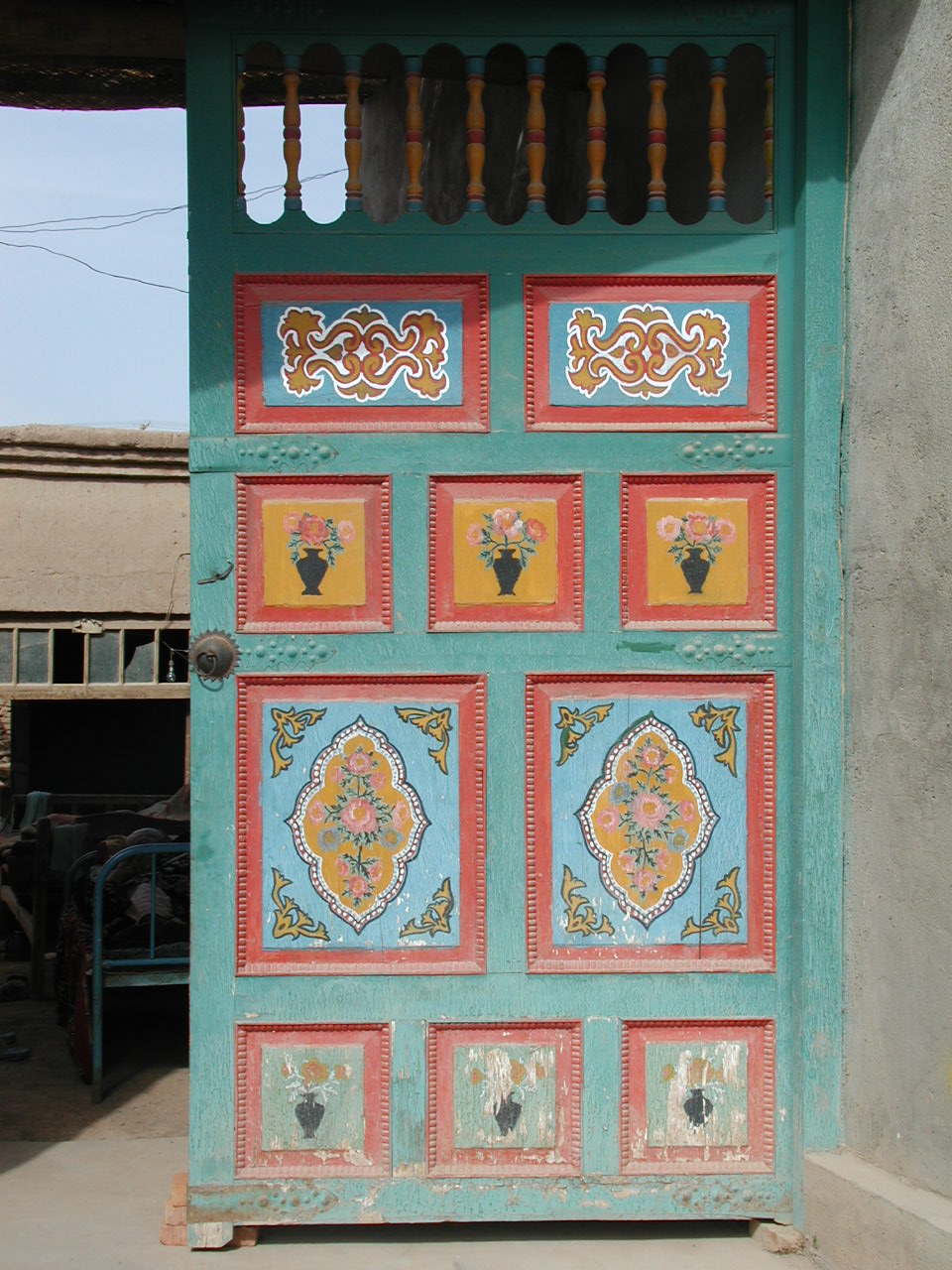
Silk Road - Xinjiang Turfan, Toyoq Valley with the interesting Door

We did came for the door, so I have to write about the door!

These doors are colourful, historical and dated back to 500 years old.  Why?  Most of it are the influence from the Persian and Arabic art.  Uyghurs are muslim and this region has a long history of the domination from the Semitan Penisular.  The Arabic art shown on both the carving as well as the colour.

My favourite one is this bright orange colour door. 
The reason is for the old lady who came to open the door for us.  She reminded me of this place that time does not seem to be matter to the people, only life does.

All these doors are built with big frame, some closed to 15 feets in height. Two main features are - there is always a smaller door embedded at around 5-6 feets height and there is always airing holes on top. Some of the colletions here.


Silk Road - Xinjiang Turfan, Toyoq Valley in the Flaming Mountain

After being the tourist over Turfan, we read about a place where the "house door" is colourful and dated back to 500 year ago!  Without a doubt, we got up early the next morning, went to the bus station, after numerous enquiries, we finally got one lady reluctantly told us about the bus we should take with the when and how to go to Toyoq Valley.  At first, I was took back by all this reluctancy as Uyghur has been so friendly and helpful. Got the ticket, went on the bus, I started to understand the reason after the bus left Turfan.  The journey is into the Flamming Mountain, probably without a single soul  in the middle of the desert. Also, it is one of those place where if you miss the bus back, there is no where to stay. 
After an hour into the journey, we saw the sign to get off the bus. The junction is to an oasis village along the stretch of road. There is no modernity, just a normal road. But look deeper, we saw the amazing water irrigation syetem that keep this oasis going.


Toyoq Valley is a grapevine oasis. The main reason Turfan region can have such a good growth of grape thanks to the great development of the water irrigation system called Karez Well. The Karez Well system channeled water underground from the mountain to the vineyard, defining the desert hot dry weather making Turfan a perfect place to grow grape.
As we walked (we walked for closed to 6 hours that day to cover the whole oasis grapevine village), we saw this lady in red with the most resilence to maintain her feminine. I am amazed by her insistent to wear a heel in this road condition. I was wearing a pair of Adidas walker and my ankle was aching.


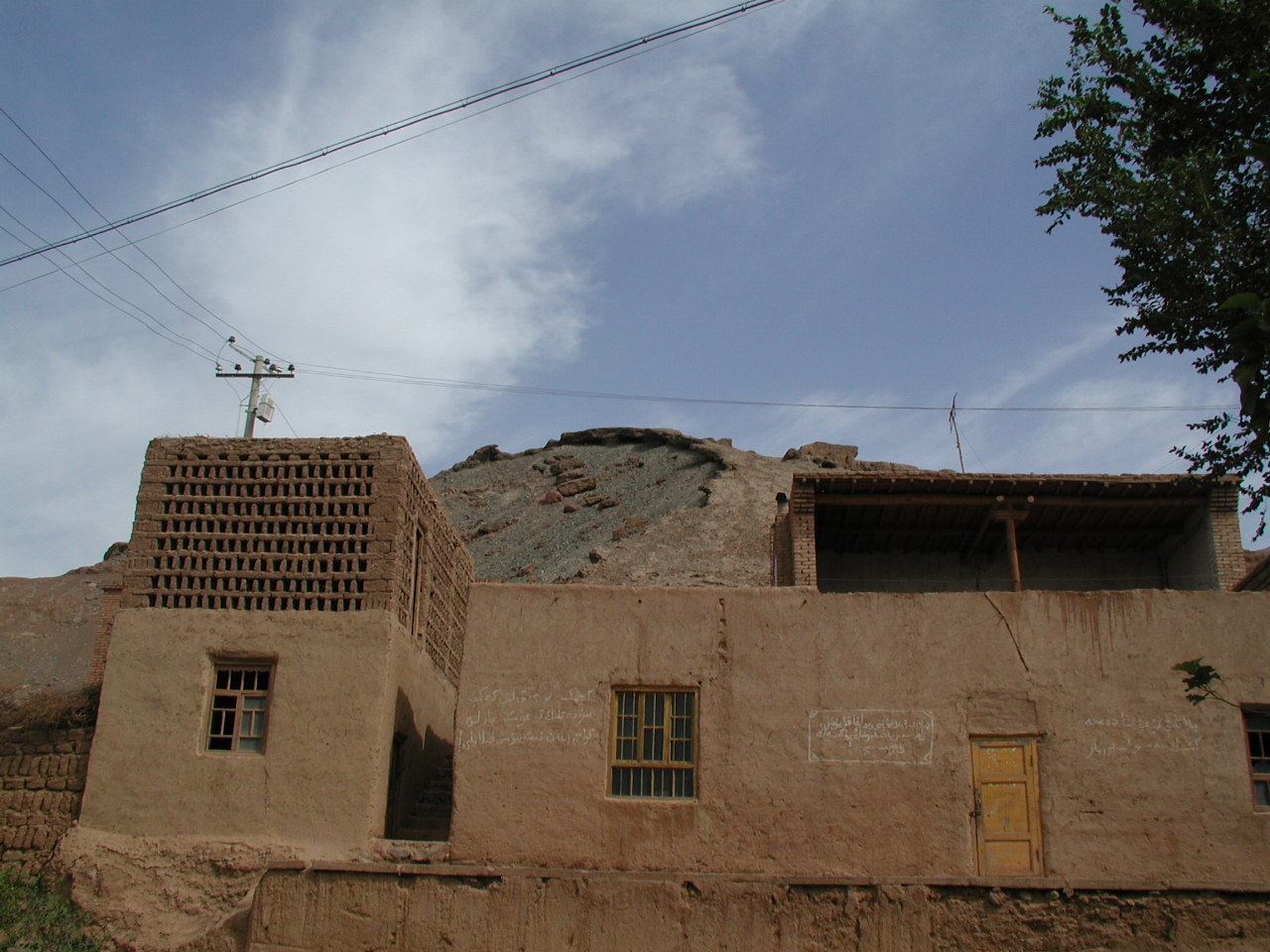
All villagers here cultivate grapes, indirectly, raisin is a main product.  Most village home is the flat top style with a roof that built to dry grape for raisin. The roof top is built with hole for airing the grape. It looks like a square box and the brick is made of mud from the ricer bed.

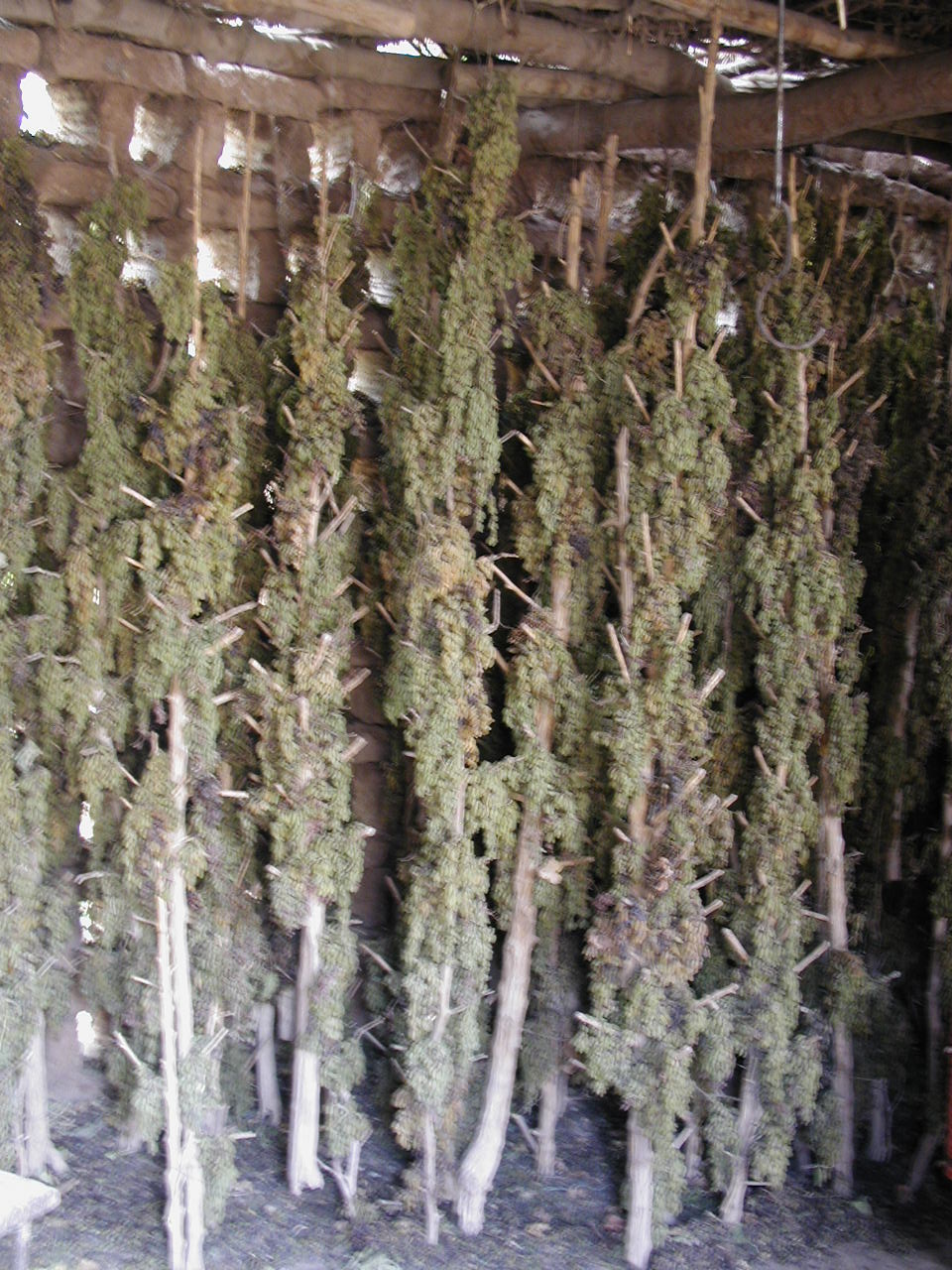
The grape is harvest at the end of Auguest through October before the snow came.  The grape will be hanged on branches that prepared for drying to raisins.

In Turfan regions, there are many such oasis cultivating grapes.  The valley is normally dark green when it contrast with the red earth and the desert.


September 8, 2004

Silk Road - Xinjiang Turfan, the driest city on earth!

Before I started talking about going on Silk Road, I imagined everything like those in Turfan.  After I came back from Silk Road, I talked about everything in Turfan.  Yes, you are right, I love Turfan.  Turfan to me is like the ancient Chinese once said "西丝", the persian beauty! This town is so relax till you want to stay forever.

The most striking part of this city, is very much because of all the history sessions I had in high school.  Almost all my high school teacher is from Taiwan, or educated in Taiwan.  Thus, Chinese history is part of life than school.  A major part is about Khazack, Mongol, Xiongnu and the western territory of Xinjiang.  Not hard to see the reason, the Hans considered concurring the west and north as their major empire.  While Turfan is a oasis town which centred at most the empires trying to concurr the west, it has long history since 100AD and been concurred by the Turks, Rouran, Gokturks, Tang dynasty, Tibetian, Sogdian, etc. To have such background, Turfan is loaded with historical sites and mixture of cultures.  It is everything to experience the imagination I had in high school, is De-Javu!

After the long journey back from Kanas Lake, we took a 3 hours bus heading east.  We been to the west, the north, well, heading east means heading home.  Turfan was our last stop in Xinjiang. As we had came to know, learn and realize so much about the Uyghur Culture, not exactly Hans, we love it. Before we headed to all the famous histrorical sites, this is how relax it is.
9am, bed and sleeping in the middle of the street.
No, I am kidding.  Turfan is one of the driest cities in the world. Thus, it is hot and dry.  There is a local culture to move the bed out of the building at night so that it is easier to sleep with the breeze.  It is common in Turfan.

Well, if you come to Turfan, you have to visit the 8 UNESCO historical sites for it is too famous such as the Bezeklik Thousand Buddha Caves, the Tarim Mummies, etc.  The very famous Emin Minaret is completely built by earth brick.  One of the 8 Great Literaturers in the Ming dynasty, 苏东玻 was outcasted to Turfan and stay here for the rest of his life.

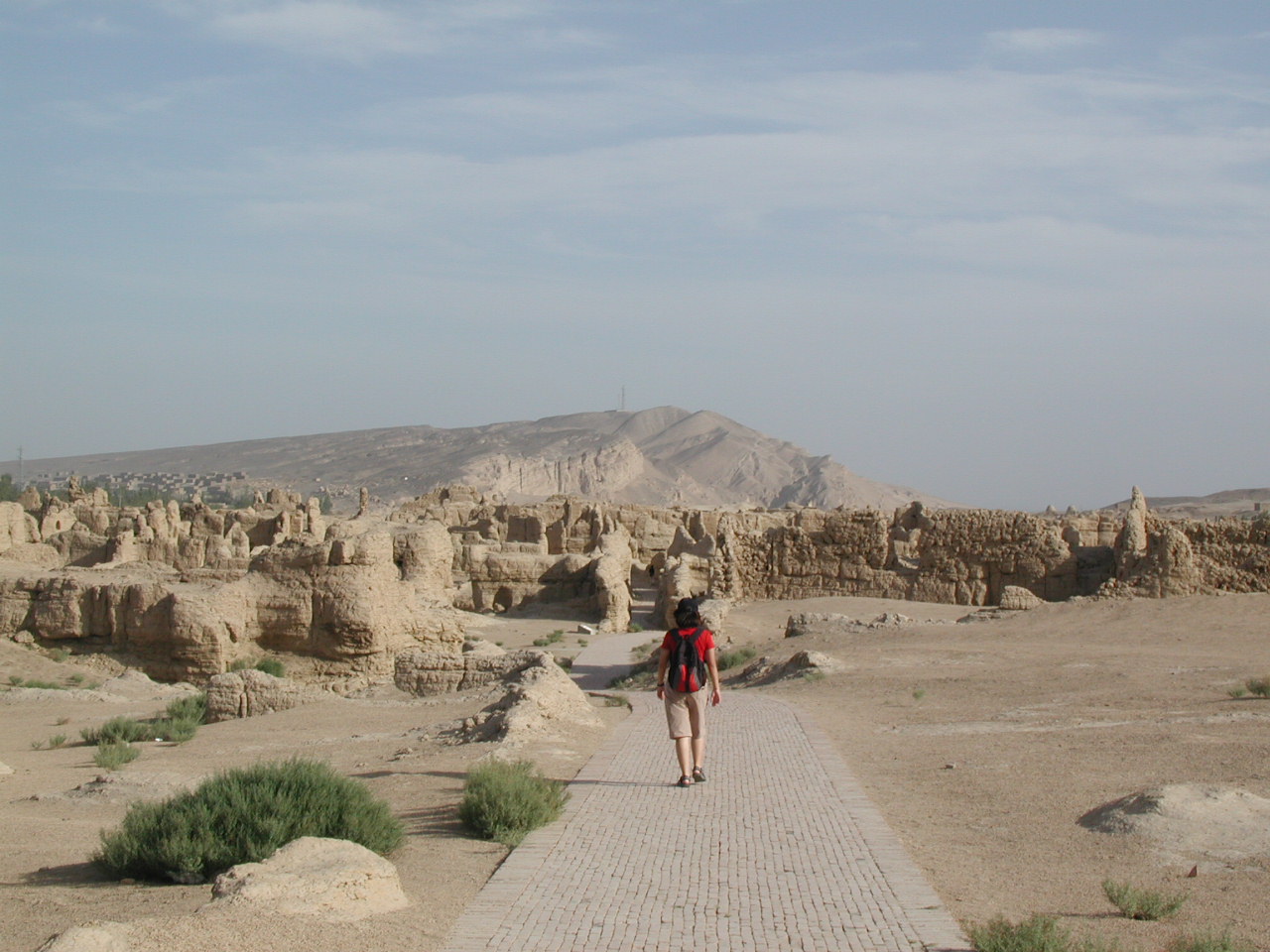
For all, I only impressed by the JiaoHe Ruins.   Jiaohe Ruins is still very much intact. Taking a walk through this ruins  is a real live history session. It shows the properous time of the Silk Road.

I named this photo "背影", for it to looks so lonely!
In Turfan, even with such hot and dry climate, we couldn't forget to talk about Grapes.  As it is an oasis, fruit is in plenty while grapes are in major production.  Going into the town, you will not miss the Qingnian Lu, a street which shaded by grapevine trellises.  Just like I say, you will fall in love with Turfan.  Take a walk to this street will tell you why.
Transportation vehicles are allowed.
Some of the grapevine trellises are over 150 year old.
When the harsh cold Winter comes, the city will unfold these grapevine down and cover it with the desert sand. When Spring comes, they will put it up the trellises.  Citizen are well behave and no one is trying to pick the grape.  They don't need to, well, you will see why when we go to Toyoq Valley.

September 6, 2004

Silk Road - Xinjiang Kanas Lake II, where is the Kanas Monster???

Kanas Lake was once in the news for a long period of times, not so much becuase of its beauty, but much about the legendary Kanas Monster.  Many claimed they had seen the shadow of the monster in the lake in different hour in different time of the day in different seasons.  There was even once a research team (may be more appropriate to call them the monster hunting team) was sent to watch the lake so that they can confirm the monster.  Well, all to no avail.

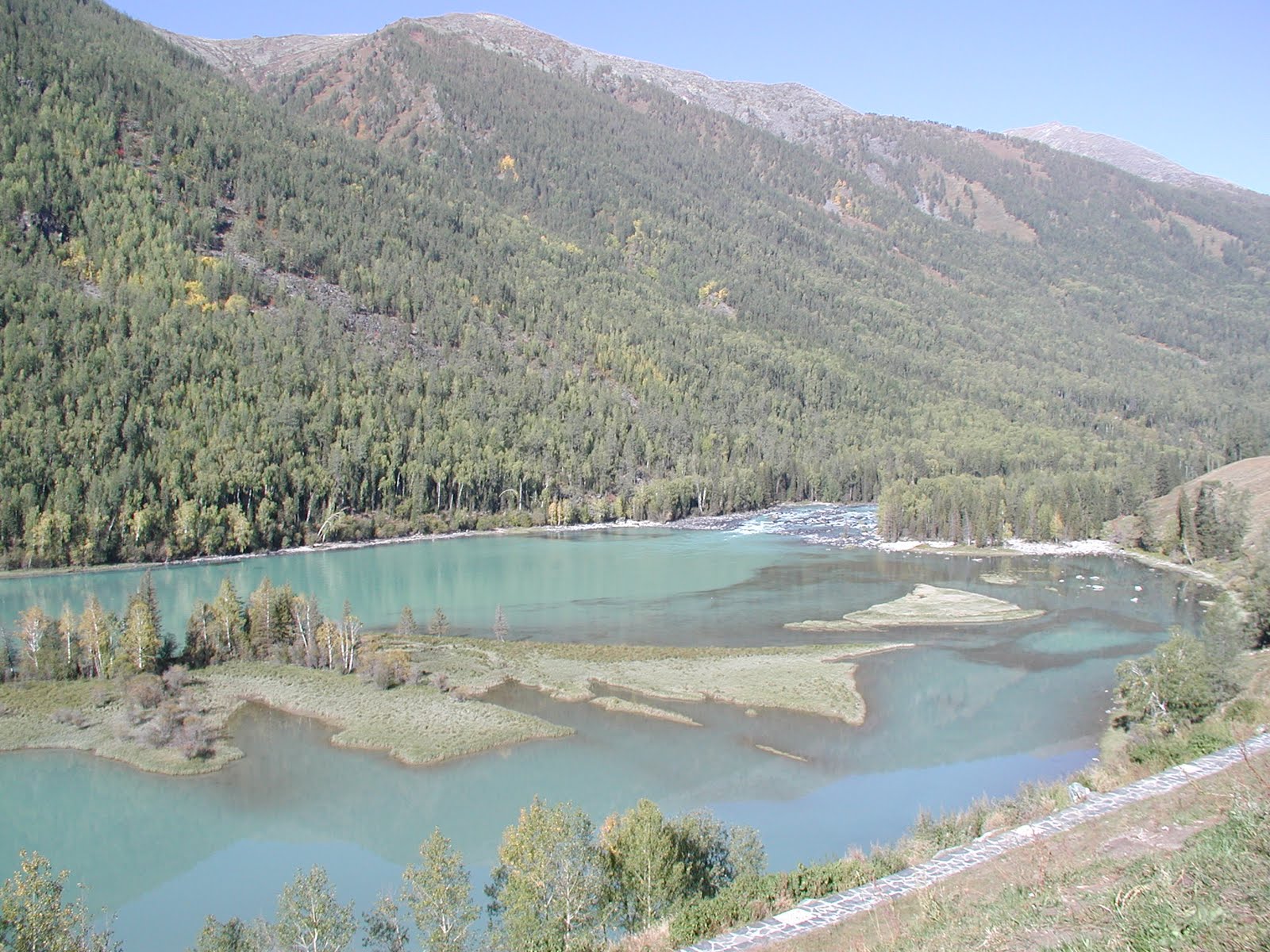
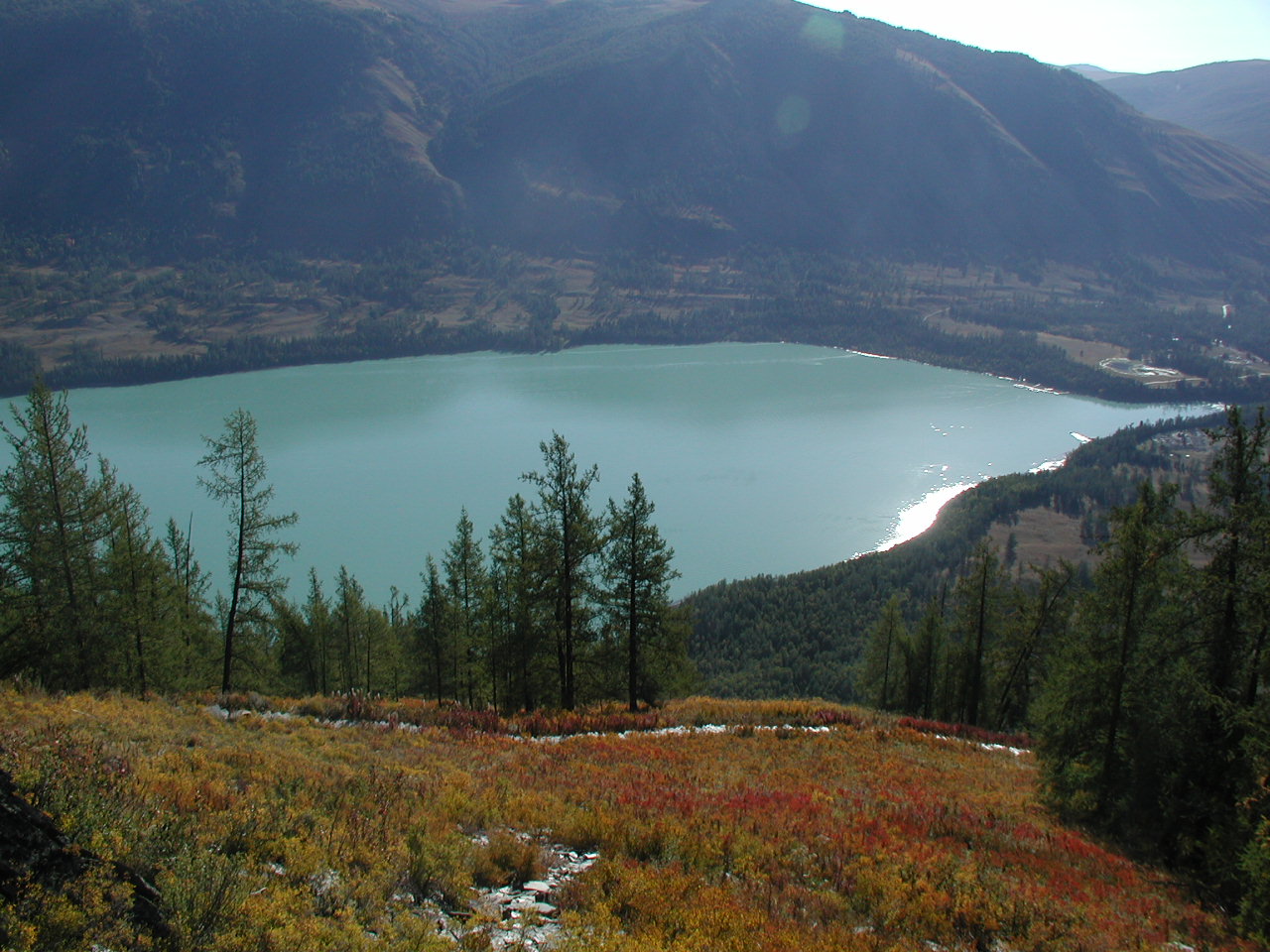
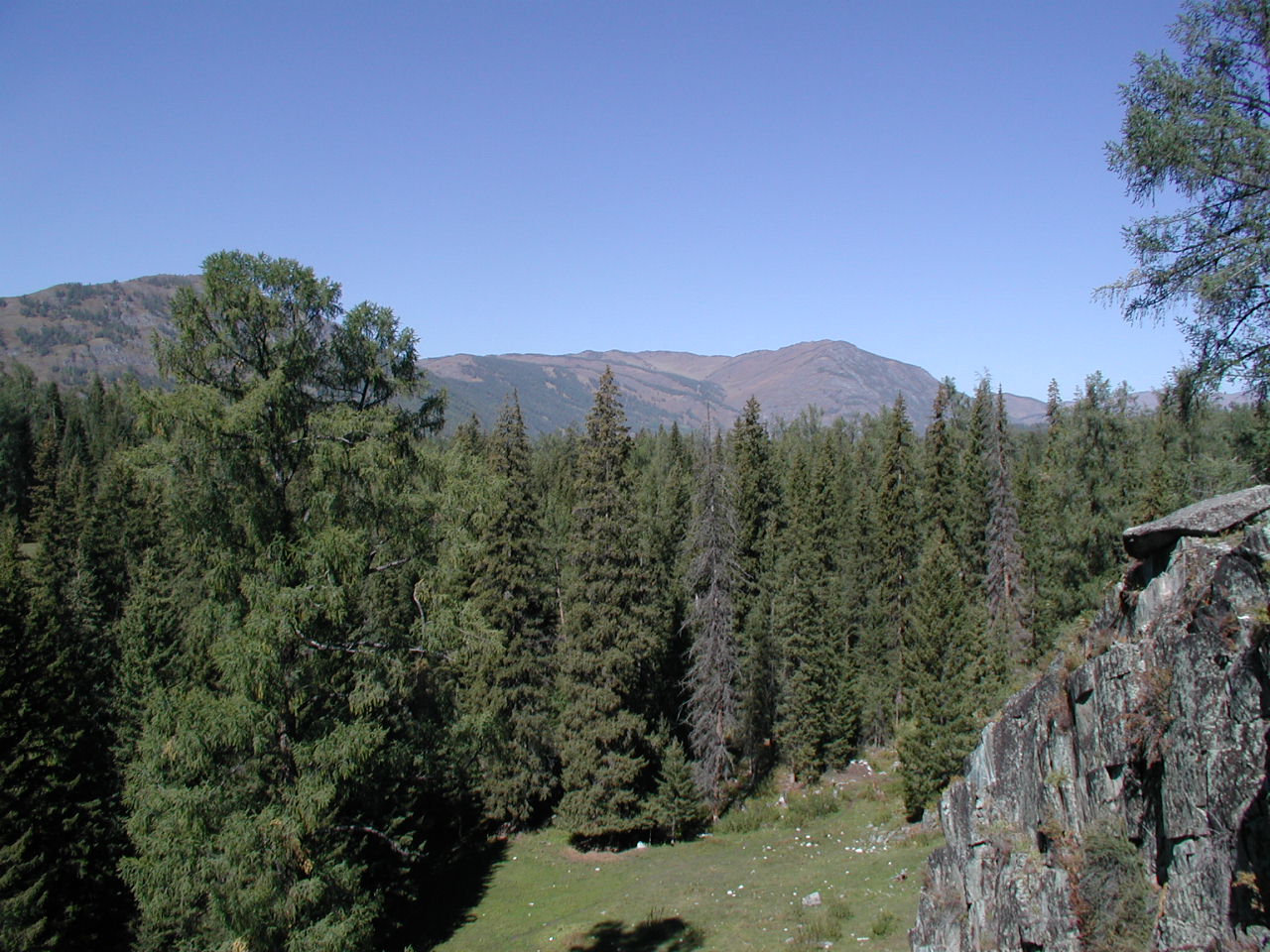
Beside the famous monster, Kanas Lake is a true beauty which hardly known to the world.  I was thinking what is so special about a lake where it is not far from the desert.  The truth is the climate zone changed fast once we reached the north.  Don't forget we are at the border of Russia, the Altai looks absolutely pretty in cold climate.
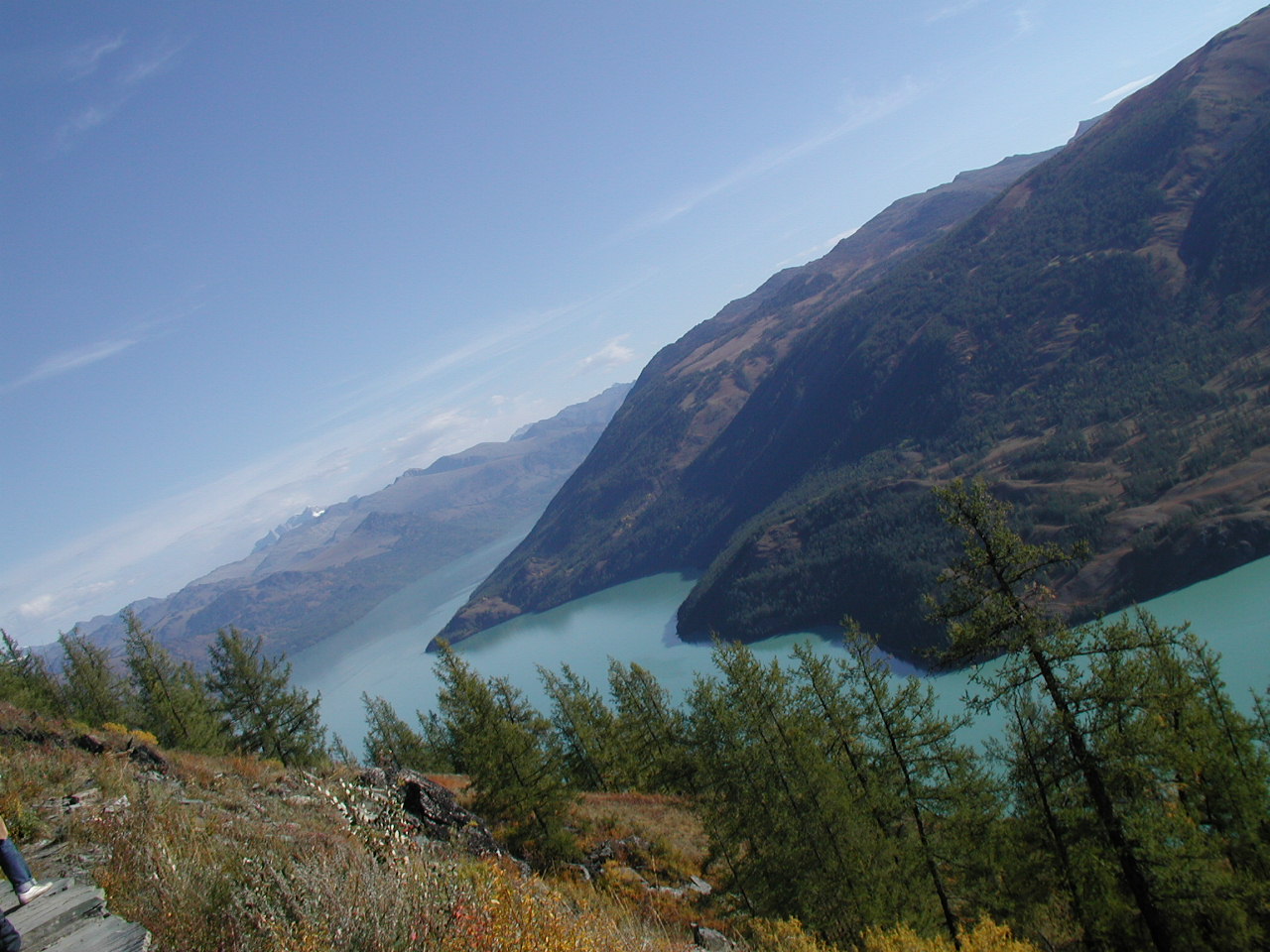
Kanas Lake is 24KM long, wait, you have not seen the full lake yet!
Stretching upward.
Almost to the full lake.
1/3 of the lake.
Another 1/3.
The final opening.
When you saw these 6 pictures, you will start to believe it isn't a waste for the 18 hours bus ride.

Kanas Lake is the deepest, 184M, fresh water lake in China. The water comes glacier melt in the north Altai Mountain, flow down to the lake and out to Kanas River, later the Burqin River.  One thing is very special about Kanas Lake is the colour of the water, it is so milky blue that you would not believe it is lake water.  The water is full of mineral embeded in the glacier making the lake looks out of the normal blue.  Many said the so called Kanas Lake is merely the shadow of changing colour of the lake milky blue water due to sunlight in different seasons.  The mineral is so thick that the refrlection confused people to think that they saw the shadow of the monster.  Well, while some others still claimed the sighting of the creatures. It does not matter whether there is or there is not, visiting Kanas Lake will not be a regret!

Beside the lake, staying a night with the Kazakhs was an unique experience.  The harsh cold wind, the camp fire, of course, you can't avoid the camp fire dance.  But the most significant of all, the Kazakhs.  They seem to have nothing, but we were told that they are rich, they don't look like but I believe the guide.
My favourite photo of the trip and at all time, is a she, so cute!!!

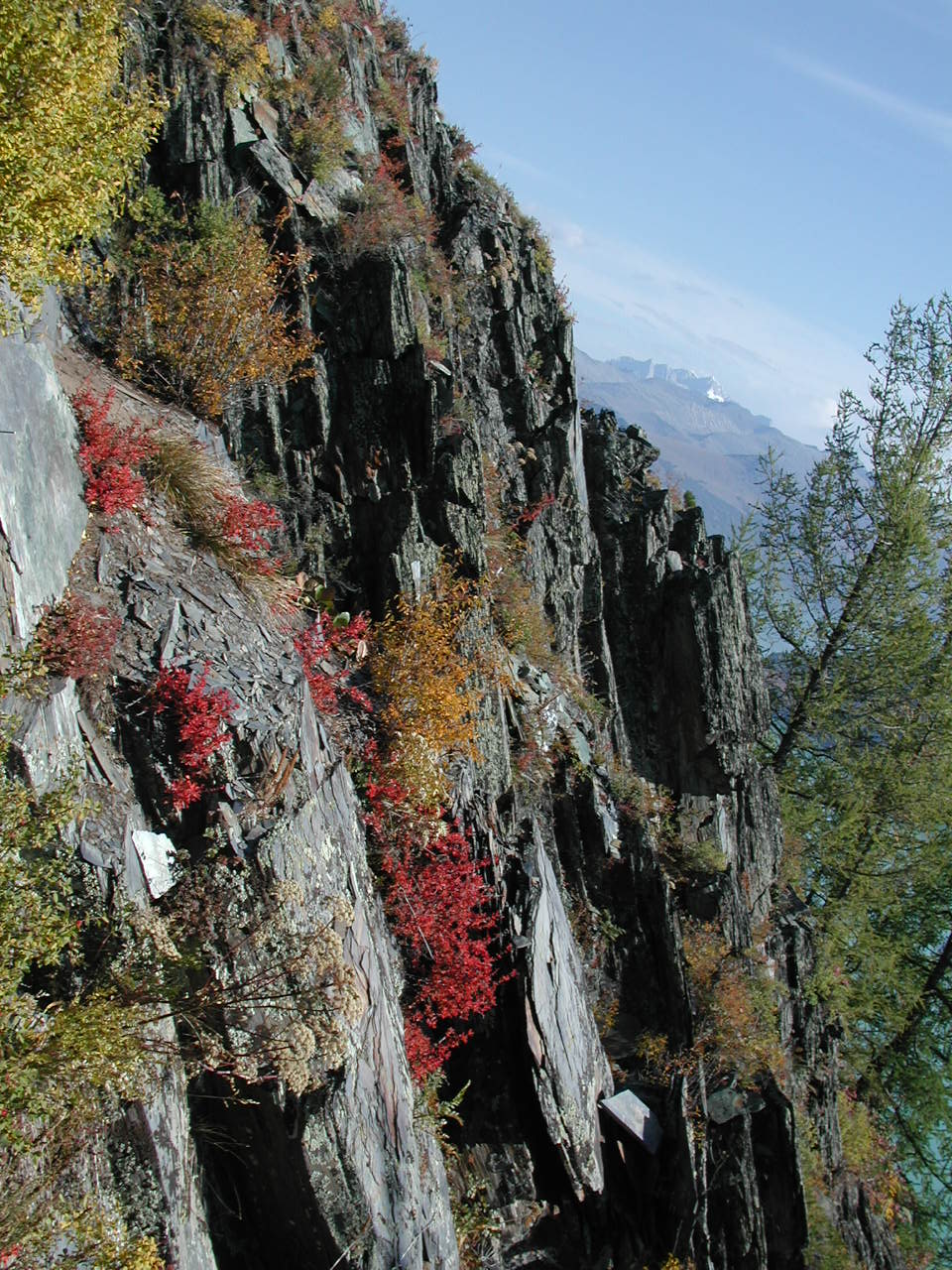
As we climbed up to the highest to view the lake, the scenery is like those in the Chinese kungfu novel with the superior master meditate around for ages.  Just kidding, but is closed. After viewing the sunset, I felt it was short and we had to leave the next morning.

Silk Road - Xinjiang Kanas Lake I, the Kazakhs in the Altai.

The journey from Urumqi to Kanas Lake was interesting, passing by the famous Karamy, we arrived Burqin after a 8am to 11pm bus ride.  As Burqin is at the north Altai region near the border of China with Russia, Mongolia and Kazakhstan, the ethnic live here are the Kazakhs.  

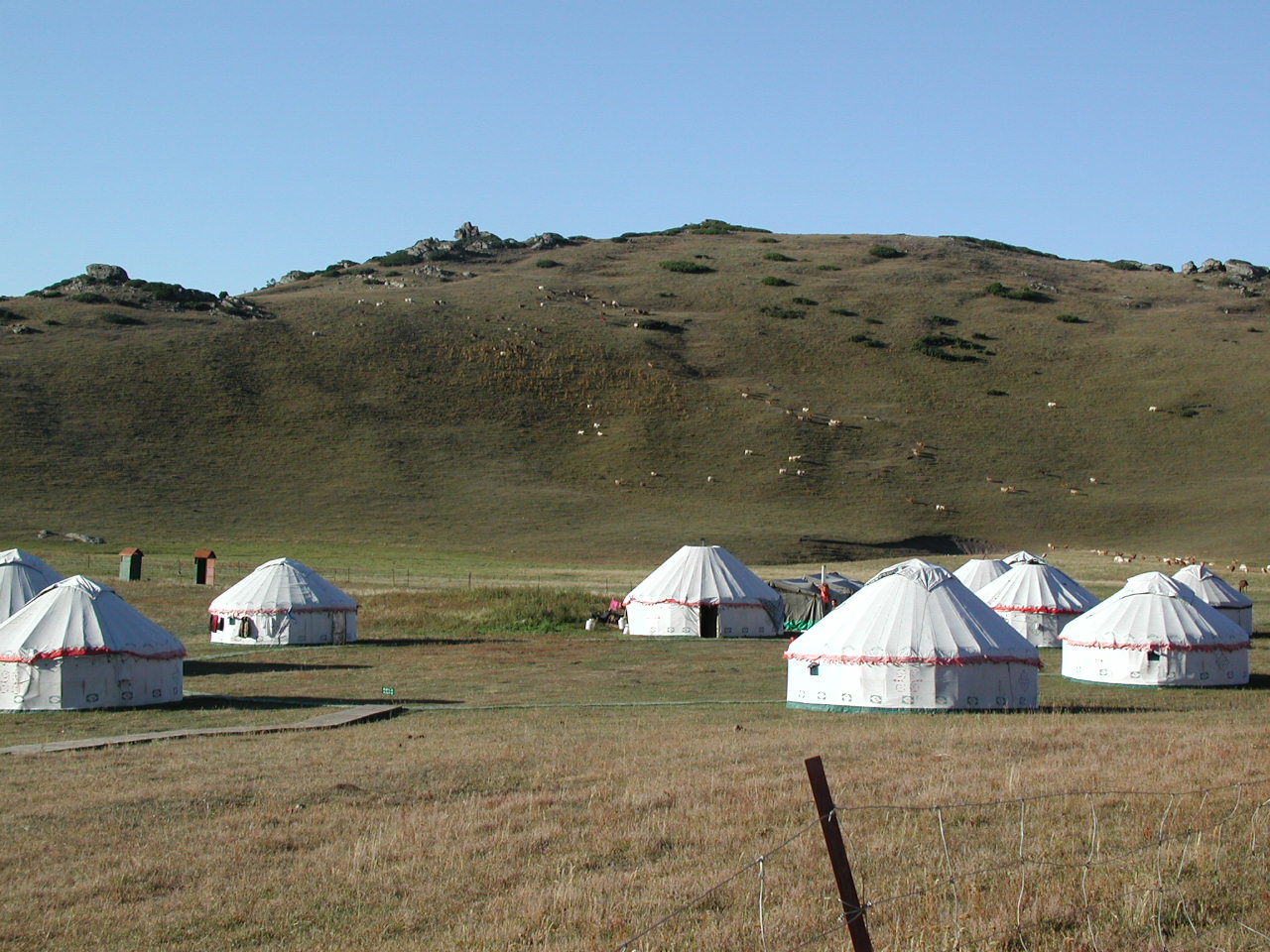
After resting at Burqin for a night, we were on the bus again. The first thing was a group of Kazakhs nomading - moving their yurt from one place to another. The Kazakhs are nomadic in nature and still living like before.
The Kazakhs are real horseman, moving a troop is no easy business. Everything was in-controlled until our bus was on the road and these poor Kazakhs had to let us through, like we were there first before them and we had the privilege.

As we arrived in the Kanas Lake National Park, the way the people live is insight - the yurts and the wooden houses.  It amazed me how these Kazakhs live through the harsh cold winter.  We were there in September, but the night was unbearable. I put up 3 sweaters, my jacket and rolled myself in 2 thick blankets, but I felt frozen through the nights. But the Kazakhs seem as ease, is just another autumn night.
The yurt, in troops.

The wooden house, we stayed at one of these for a night.

As we were already in the Altai mountain ranges, the mountain is in sight. The Kazakhs run their daily life and there is this ethnic group called the Tuva.  The guide told us that the Tuva can not call themselves a race because the whole ethnic group can not make up the race requirement of 1400+ people.  Thus, they have to stay as an ethnic group, not a race.

After settling in, it was almost time for the lake.  Trust me, you will not want to miss the lake.  Next!